Home / Research

Research

All students deserve safe schools and access to mental health supports. Our research informs best practice and policy in school mental health. We study ways to increase access to effective school mental health support. We also study ways to prevent violence and trauma in schools.

Screening

We study ways to identify students who would benefit from extra mental health support.

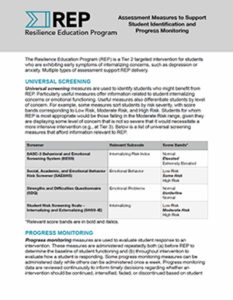
We developed a universal screener that identifies school-age children who could use some help building social and emotional skills. This screener is called the Social, Academic, and Emotional Behavior Risk Screener or SAEBRS.

For our current project, we are adapting the SAEBRS screener to be used with children ages 3 to 5 who speak English or Spanish. The early childhood screener is called the Identifying Behavioral and Emotional Growth Indicators and Needs screener or I-BEGIN.

Research Projects

Development and Validation of the Social, Academic, and Emotional Behavior Risk Screener for Early Childhood
The primary purpose of this project is to develop and validate a social, emotional, and behavioral risk screener for early childhood. The assessment will be an online and application-based universal screening system available in both English and Spanish. It will be aligned with the Social, Academic, and Emotional Behavior Risk Screener (SAEBRS), a universal screener for K–12 settings that has been adopted in all 50 states, with the aim of supporting transition planning between early childhood and K–12 settings as well as informing intervention.

Eklund, K., Kilgus, S. P., von der Embse, N., Beardmore, M., & Tanner, N. (2017). Use of universal screening scores to predict distal academic and behavioral outcomes: A multi-level approach. Psychological Assessment, 29, 486-499. https://doi.org/10.1037/pas0000355

Eklund, K., Kilgus, S. P., Barber, A. J., Collins, B., & Eikenmeyer, M. (2023). The effect of student race/ethnicity on the diagnostic accuracy of the Social, Academic, and Emotional Behavior Risk Screener (SAEBRS). Psychology in the Schools, 60(10), 3878-3895. https://doi.org/10.1002/pits.22967

Fallon, L. M., Veiga, M., Susilo, A., Robinson-Link, P., Berkman, T., Minami, T., & Kilgus, S. P. (2022). Exploring the relationship between teachers’ perceptions of culturally relevant supports, student risk, and classroom behavior. Psychology in the Schools, 59(10), 1948-1964. https://doi.org/10.1002/pits.22568

Fallon, L. M., Veiga, M. B., Susilo, A., & Kilgus, S. P. (2023). Do teachers’ perceptions of high cultural responsiveness predict better student behavioral outcomes? Behavioral Disorders, 48(2), 97-105. https://doi.org/10.1177/01987429211067217

MIDAS logo

Multi-Informant Decisional Assessment System

Research Projects

Problem Analysis

We develop ways for schools to find the mental health interventions that will meet their unique needs.

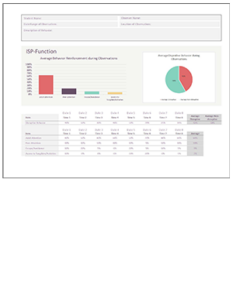
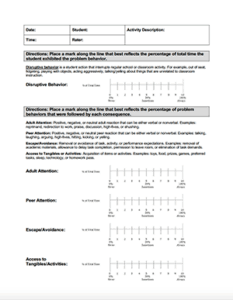
A suite of brief problem identification tools for students in need of Tier 2 support. These tools help identify function of problem behaviors and deficits in positive skills. Results can be used to select and adapt appropriate interventions.

Research Projects

Kilgus, S. P., von der Embse, N. P., Scott, K., & Paxton, S. (2015). Use of the Intervention Selection Profile–Social Skills (ISP-SS) to identify social skill acquisition deficits: A preliminary validation study. Assessment for Effective Intervention, 40, 228-239. https://doi.org/10.1177/1534508415577469

Kilgus, S. P., Kazmerski, J. S., Taylor, C., & von der Embse, N. P. (2017). Use of Direct Behavior Ratings (DBRs) to collect functional assessment data. School Psychology Quarterly, 32, 240-253. https://doi.org/10.1037/spq0000156

Kilgus, S. P., von der Embse, N. P., Eklund, K., Izumi, J., Peet, C., Meyer, L. N., & Taylor, C. N. (2019). Reliability, validity, and accuracy of the Intervention Selection Profile–Function: A brief functional assessment tool. School Psychology, 34, 531- 540. https://doi.org/10.1037/spq0000325

Kilgus, S. P., Bonifay, W. E., Eklund, K., von der Embse, N. P., Peet, C., Izumi, J., Shim, H., & Meyer, L. N. (2020). Development and validation of the Intervention Skills Profile–Skills: A brief measure of student social-emotional and academic enabling skills. Journal of School Psychology, 83, 66-88. https://doi.org/10.1016/j.jsp.2020.10.001

Assessment of Decision-Making & Validation of Intervention Cost-Effectiveness

We are developing software that compares the impact and costs of Tier I/II interventions based on school size, need, and resources.

Research Projects

von der Embse, N., Jenkins, A. S., Christensen, K., Kilgus, S., Mishra, M., & Chin, B. (2021). Evaluating the cost of prevention programming and universal screening with discrete event simulation. Administration and Policy in Mental Health and Mental Health Services Research, 48(6), 962–973. https://doi.org/10.1007/s10488-021-01108-8

Intervention

We find ways to address the mental health needs of students in the classroom.

A Tier 2, group-oriented intervention to decrease attention-seeking behaviors. It is designed to provide students with consistent, scheduled adult attention each day.

Research Projects

Evaluation the Efficacy of a Daily Check-in/Check-out Intervention for Students At-Risk for Emotional and Behavioral Disorders

The purpose of this study is to evaluate the efficacy of Check-in/Check-out (CICO) for improving social, emotional, and academic behavior of elementary school students at risk for emotional and behavioral disorders (EBD). CICO is a manualized Tier 2 behavioral intervention commonly implemented within a multi-tiered framework and designed to improve the social and behavioral performance of students with emerging problem behavior.

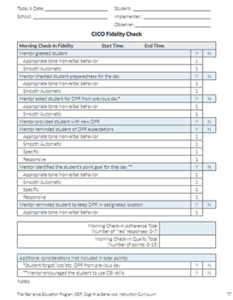
Check-in/Check-out Fidelity Checklists

Check-in/Check-out Fidelity Checklists
A series of checklists to assess whether key steps in the Check-in/Check-out (CICO) intervention are completed well. When school staff consistently complete the key steps, they increase the likelihood that CICO will produce positive outcomes. The CICO Checklists can be used as part of the Resiliency Education Program or independently.

Eklund, K., Kilgus, S. P., Taylor, C. N., Allen, A. N., Meyer, L., Izumi, J. Beardmore, M., Frye, S., McLean, D., & Kilpatrick, K. (2019). Efficacy of a combined approach to tier 2 social-emotional and behavioral intervention and the moderating effects of function. School Mental Health, 11(4), 678-691. https://doi.org/10.1007/s12310-019-09321-5

Kilgus, S. P., Fallon, L. M., & Feinberg, A. B. (2016). Function-based modification of Check-In/Check-Out to influence escape-maintained behavior. Journal of Applied School Psychology, 32, 24-45. https://doi.org/10.1080/15377903.2015.1084965

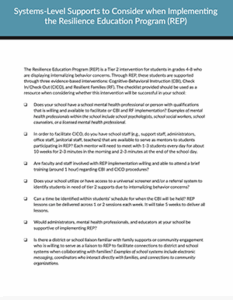
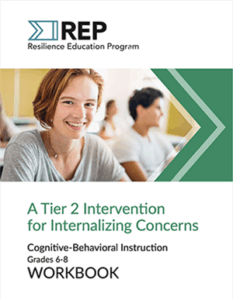
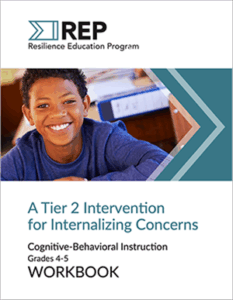
A targeted Tier 2 intervention for students at risk for internalizing concerns, such as depression and anxiety. 

Research Projects

Allen, A. N., Kilgus, S. P., & Eklund, K. (2019). An initial investigation of the effectiveness of the Resilience Education Program (REP). School Mental Health, 11(1), 163-178. https://doi.org/10.1007/s12310-018-9276-1

Barber, A., Eklund, K., Weist, M. M., Soto, D., Cruz, S., Collins, B., & Knuckey, L. (2025). Using community collaboration to evaluate the cultural relevance of the Resilience Education Program. School Psychology Review, 40(2), 207-222. https://doi.org/10.1037/spq0000657

Eklund, K., Kilgus, S. P., Izumi, J., DeMarchena, S., & McCollom, E. P. (2021). The Resilience Education Program: Examining the efficacy of a tier 2 internalizing intervention. Psychology in the Schools, 58(11), 2114-2129. https://doi.org/10.1002/pits.22580

Kilpatrick, K., Kilgus, S. P., Eklund, K., & Herman, K. C. (2021). An evaluation of the potential efficacy and feasibility of the Resilience Education Program: A Tier 2 internalizing intervention. School Mental Health, 13(2), 376-391. https://doi.org/10.1007/s12310-021-09428-8